
At Roar Physiotherapy, we’re always looking for ways to help you recover faster, get stronger and return to what you love doing.
One tool you might hear about is Blood Flow Restriction (BFR) training.
It’s popular. It’s effective. But like anything in rehab, it’s only useful when applied properly.
What is Blood Flow Restriction Training?
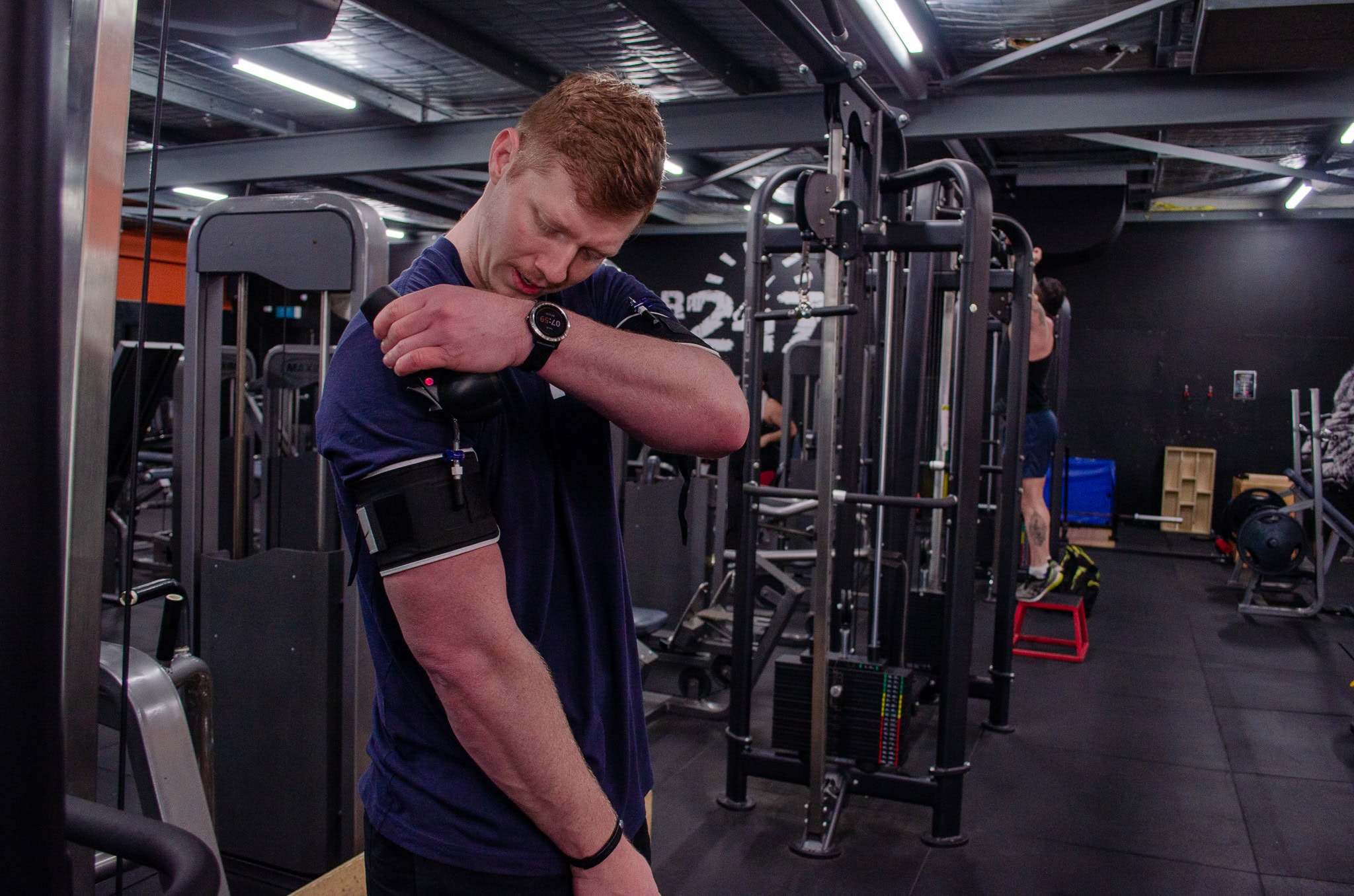
BFR involves placing a specialised cuff around your arm or leg to partially restrict blood flow during exercise.
This allows you to train with very light weights while still getting meaningful strength and muscle gains.
Why Would We Use It?
Normally, to build strength you need to lift heavy (around 70%+ of your max).
But what if you’re in a phase of not being able to lift heavy?
Our clients often:
- Have just had surgery
- Have painful joints
- Are new to resistance training or are unable to tolerate the heavy loads yet
- Have no time to get to the gym or access advanced equipment
That’s where BFR comes in.
It allows us to:
- Build muscle early
- Reduce stress on joints
- Maintain critical strength and muscle mass during recovery
Does It Actually Work?
Yes, and the research is strong.
- BFR leads to greater strength and muscle gains than light exercise alone
- It can produce similar muscle growth to heavy lifting
- It’s been shown to improve strength, function and pain in rehab settings
What Does It Feel Like?
BFR feels different to normal training.
You’ll likely notice:
- A tight pressure from the cuff
- A strong muscle “burn” (like the best muscle pump you’ve ever had)
- Faster fatigue than usual
This is completely normal and actually what we’re aiming for.
Is it Safe?
When done properly, BFR is considered safe.
At Roar Physiotherapy, we:
- Screen every patient carefully
- Use individualised calculations to predict pressure (not guesswork)
- Monitor your response closely
It’s not suitable for everyone, particularly if you have certain vascular or cardiovascular conditions, which is why it should always be guided by a qualified clinician.
Is BFR Better Than Normal Strength Training?
No, and this is important.
BFR is a tool, not a replacement.
It’s most useful:
- Early in rehab
- When load is limited
- During recovery phases
But long-term, building strength still means progressing to heavier loads.
The Roar Physiotherapy Approach
At Roar Physiotherapy, we use BFR strategically.
We don’t rely on trends; we rely on what works. This means we have an in-depth conversation with our clients and determine their unique needs and goals and apply our clinical expertise to ensure these are accomplished.
That means:
- Using BFR when it adds value
- Progressing you when you’re ready
- Keeping your rehab focused on long-term outcomes
Final Takeaway
BFR training can:
- Help you build strength earlier
- Reduce joint stress
- Speed up parts of your rehab
But the goal is always the same:
- Get you strong
- Get you confident
- Get you back to performance
If you’re recovering from injury or surgery and want to know if BFR is right for you, our team at Roar Physiotherapy can guide you through it safely and effectively, just get in touch to find out more!
