

Breathing is essential for life and something we do instinctively. However, the way we breathe can significantly impact our physical and mental well-being, as our respiratory system closely interacts with the musculoskeletal and nervous systems.
Research has found links between disordered breathing patterns and conditions such as chronic fatigue [3], neck, back, and pelvic pain [4][5], fibromyalgia [6][7], and aspects of anxiety and depression [1][8].
Poor breathing mechanics can contribute to pain and dysfunction. Similarly, pain, dysfunction, and stress can negatively influence breathing patterns.
What Does Normal Resting Breathing Look Like?
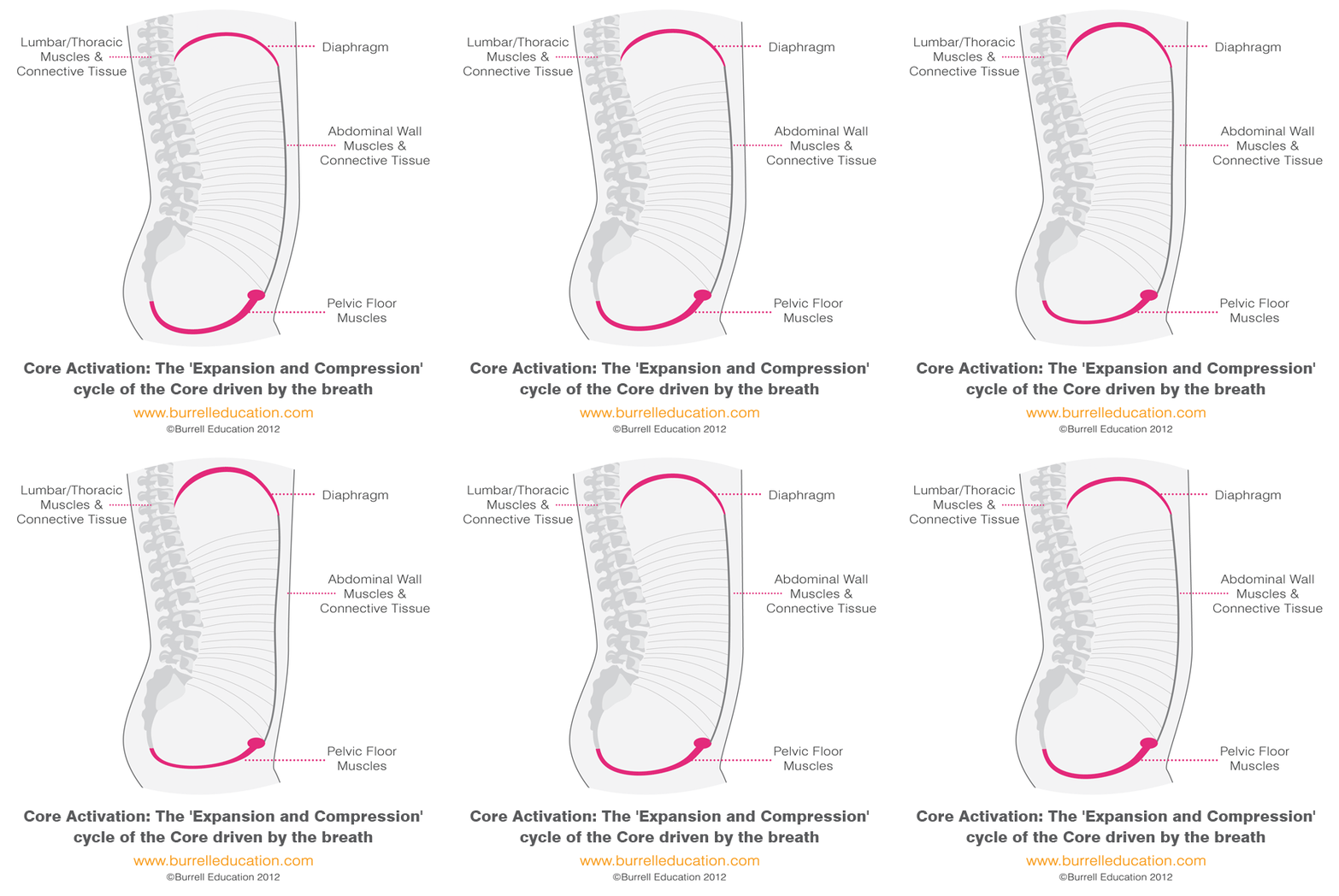
Inhalation: The diaphragm and pelvic floor lengthen and descend while the ribs lift and rotate outward. During this process, the neck and shoulder muscles should remain relaxed.
Exhalation: The diaphragm and pelvic floor elevate naturally due to the diaphragm’s recoil. The abdominals remain relaxed during resting exhalation.
When we experience stress or pain, our breathing rate often increases, leading to shorter breaths. This results in spending more time inhaling than exhaling, which can over-activate the sympathetic nervous system (our “fight or flight” response).
This stress-induced breathing pattern often shifts to the upper chest, recruiting neck muscles like the scalenes and sternocleidomastoids, even during rest.
How can you improve your breathing?
360-Degree Breathing is a simple yet effective technique that promotes optimal breathing patterns. By reducing the use of accessory respiratory muscles, it helps alleviate neck and upper back tightness or pain often associated with shallow, upper-chest breathing.
Why Is It Called 360-Degree Breathing?
The ribs attach to your spine at the back and your sternum at the front. Optimal breathing involves:
- A small degree of movement in the spine
- Ribs moving outward laterally in a bucket-handle motion
- The sternum moving upward
Why 360-Degree Breathing Is Superior to Belly Breathing
Unlike belly breathing, which focuses solely on abdominal expansion, 360-degree breathing involves expansion into the front, sides, and back of the ribcage. Over-reliance on belly breathing can result in:
- Impaired diastasis recti healing, particularly in the postpartum population
- Reduced resting tone in the abdominals
- Excessive front abdominal wall expansion
- Limited side and back rib movement, reducing diaphragm efficiency
How to Practice 360-Degree Breathing
- Sit comfortably on a chair with a tall posture. Place your hands on your lower ribcage, thumbs at the back and fingers at the front.
- Breathe in slowly through your nose, allowing your ribs to move outward and upward.
- Exhale slowly through your mouth, letting your ribs return to the starting position.
- Keep your body still during the exercise, avoiding shoulder lifting or tension.
Integrating 360-degree breathing into your routine can enhance your overall physical and mental well-being while reducing pain and tension. Give it a try today and notice the difference it can make!
References
1. Lum LC. Hyperventilation syndromes in medicine and psychiatry: a review. Journal of the Royal Society of Medicine. 1987 Apr;80(4):229-31..
2. Ott HW, Mattle V, Zimmermann US, Licht P, Moeller K, Wildt L. Symptoms of premenstrual syndrome may be caused by hyperventilation. Fertility and sterility. 2006 Oct 1;86(4):1001-e17.
3. Nixon PG, Andrews J. A study of anaerobic threshold in chronic fatigue syndrome (CFS). Biological Psychology. 1996;3(43):264.
4. Smith MD, Russell A, Hodges PW. Disorders of breathing and continence have a stronger association with back pain than obesity and physical activity. Australian Journal of Physiotherapy. 2006 Jan 1;52(1):11-6.
5. Haugstad GK, Haugstad TS, Kirste UM, Leganger S, Wojniusz S, Klemmetsen I, Malt UF. Posture, movement patterns, and body awareness in women with chronic pelvic pain. Journal of psychosomatic research. 2006 Nov 1;61(5):637-44.
6. Naschitz JE, Mussafia-Priselac R, Kovalev Y, Zaigraykin N, Elias N, Rosner I, Slobodin G. Patterns of hypocapnia on tilt in patients with fibromyalgia, chronic fatigue syndrome, nonspecific dizziness, and neurally mediated syncope. The American journal of the medical sciences. 2006 Jun 1;331(6):295-303.
7. Dunnett AJ, Roy D, Stewart A, McPartland JM. The diagnosis of fibromyalgia in women may be influenced by menstrual cycle phase. Journal of Bodywork and Movement Therapies. 2007 Apr 1;11(2):99-105.
8. Han JN, Stegen K, De Valck C, Clement J, Van de Woestijne KP. Influence of breathing therapy on complaints, anxiety and breathing pattern in patients with hyperventilation syndrome and anxiety disorders. Journal of psychosomatic research. 1996 Nov 1;41(5):481-93.
